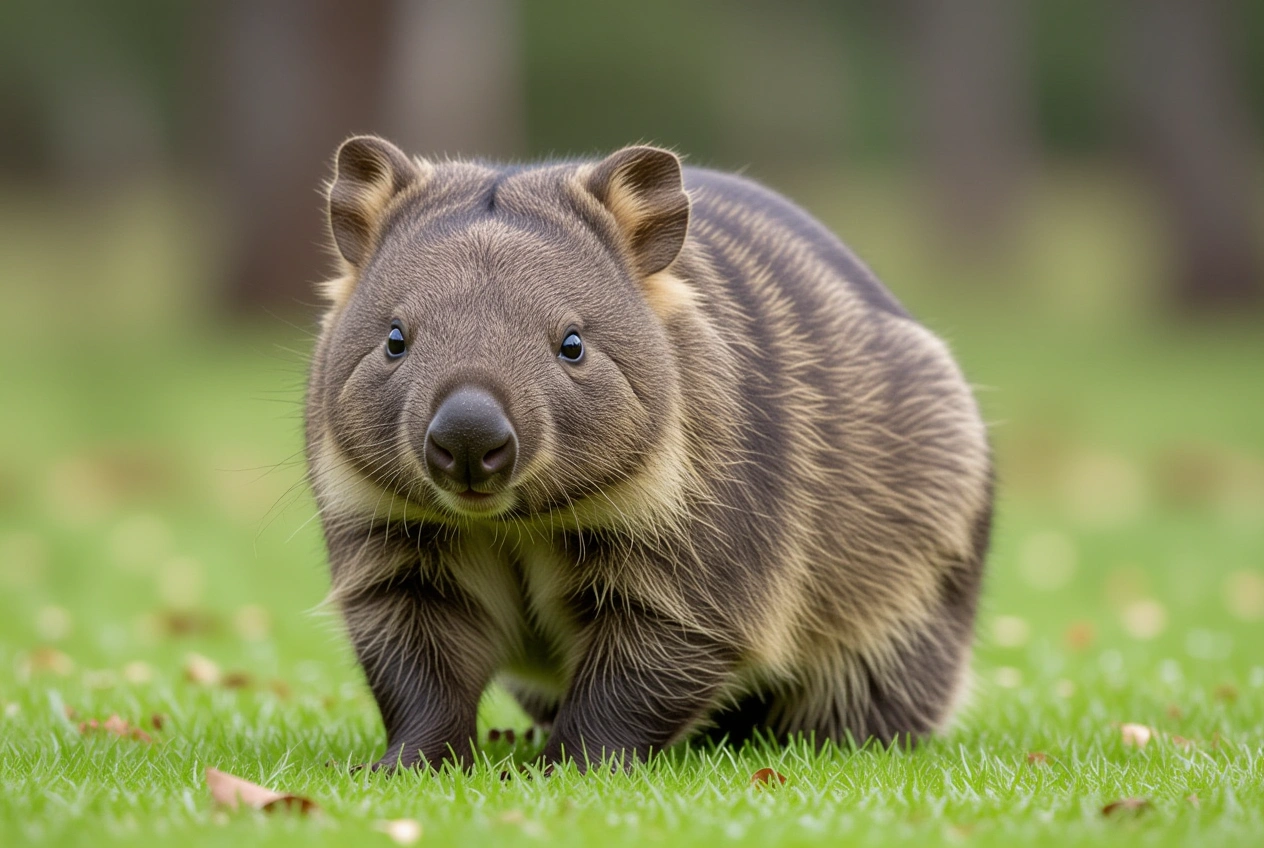
Wombats’ Cube-shaped poop: The unbelieveable truth
The following biological wonder will stun even the most seasoned of trivia buffs. ” That can’t possibly be true!”
Geometric Mystery solved
Researchers and zookeepers have observed the phenomenon for decades. They often wondered how an animal’s cylindrical digestive system could produce square, perfectly formed droppings. This phenomenon defied the conventional understandings of fluid dynamics and biology. This bizarre secret was finally revealed by groundbreaking research presented in 2018 at the American Physical Society Division of Fluid Dynamics Meeting, which Dr. Patricia Yang of the Georgia Institute of Technology led.
Science Behind the Squares
It is the wombat’s digestive system and specifically its intestines that hold the secret of its unique fecal structure. These marsupials create their beautiful geometric designs in the following ways:
- Intestinal Elasticity Variable: The colon of a wombat is not uniformly elastic. It has regions that are stiffer and more flexible, especially in the final 8% of their intestinal tract.
- Unequal Contractions: The intestinal wall contracts at different rates as the fecal material, which has a high water absorption rate (wombats live in dry environments), moves through the various sections. The waste is molded into sharp corners by some areas that squeeze faster than others.
- The Wombat’s Slow Digestion Wombats have an extremely slow digestion process that can last up to 14-18 days. The extended transit allows maximum water and nutrient extraction. This results in dense, compact feces, which are then sculpted by peristaltic movement into the final cubic shape.
Imagine pressing a flexible material into a tube with internal ridges, and different pressure points. This is the biological engineering in action within a wombat.
The Evolutionary Advantage of Cubes
Although the square-shaped poop may seem like a joke to some, wombats actually need it. They have poor vision and are reliant on smell to mark and communicate their territories. These animals often use rocks, logs or elevated places to place their droppings. The scents they leave behind are important.
The scent would be dispersed and the message of territoriality rendered ineffective if a round drop was dropped on an uneven surface. Cube shaped feces are less likely to roll, so they remain exactly where wombats intended. The clever adaptation allows them to deliver their territorial message clearly, and ensures that it remains in the same place. This is important for their social structure and survival.
The incredible biochemical quirk is a testimony to the endless ability of nature for adaptation and innovation. It proves that the strangest facts can be the most wonderful.
General Recommendations
We recommend these reliable sources for those who are fascinated by wombat biology and other amazing animal adaptations.